
Chemical peels
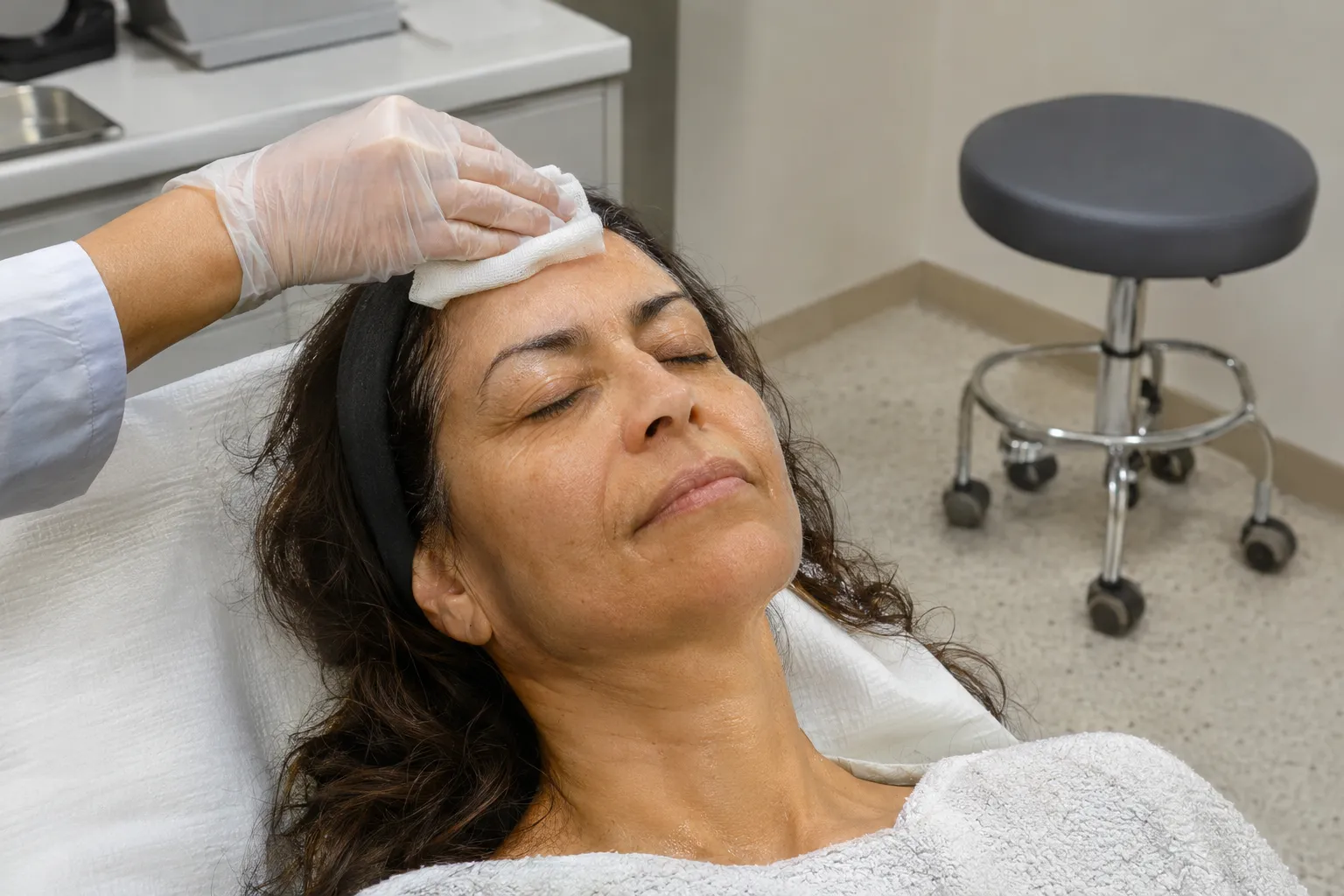
A peel sheet is mostly a list of steps, and the steps make more sense once you know what a peel is for. Two publishers set the scope, and four further documents let you read deeper.
What the sources say a peel is for
NCBI PMC lists photoaging, lentigines, melasma, and post-inflammatory hyperpigmentation as conditions chemical peels can be used to treat. DermNet says chemical peels are most often used on the face, but they are sometimes applied to other sites such as the hands. Check that the area and the concern on your sheet fall inside those two statements.
DermNet's page on chemical peels (face peels) is the first of the four further documents. The other three study peels in pigment conditions. They are a comparison of chemical peeling agents in the treatment of melasma, a paper on a professional-grade TCA-lactic acid peel for photoaging and hyperpigmentation, and a review of chemical peels in melasma with consensus recommendations from an Indian pigmentary expert group.
One question, one requirement
The three questions below each take one requirement from a peel sheet and explain it.
- Which chemical peel depths are available? This clarifies which kind of peel the sheet describes.
- Chemical peels before, during and after, what is the sequence? This clarifies the order of what you are asked to do.
- Medium peels cause what healing symptoms? This clarifies what the healing lines are describing.
Do this first
Ask the clinic which peel depth it plans to use, then read the rest of the sheet, from preparation to healing, with that answer beside it.